
Asha Multispeciality Hospital
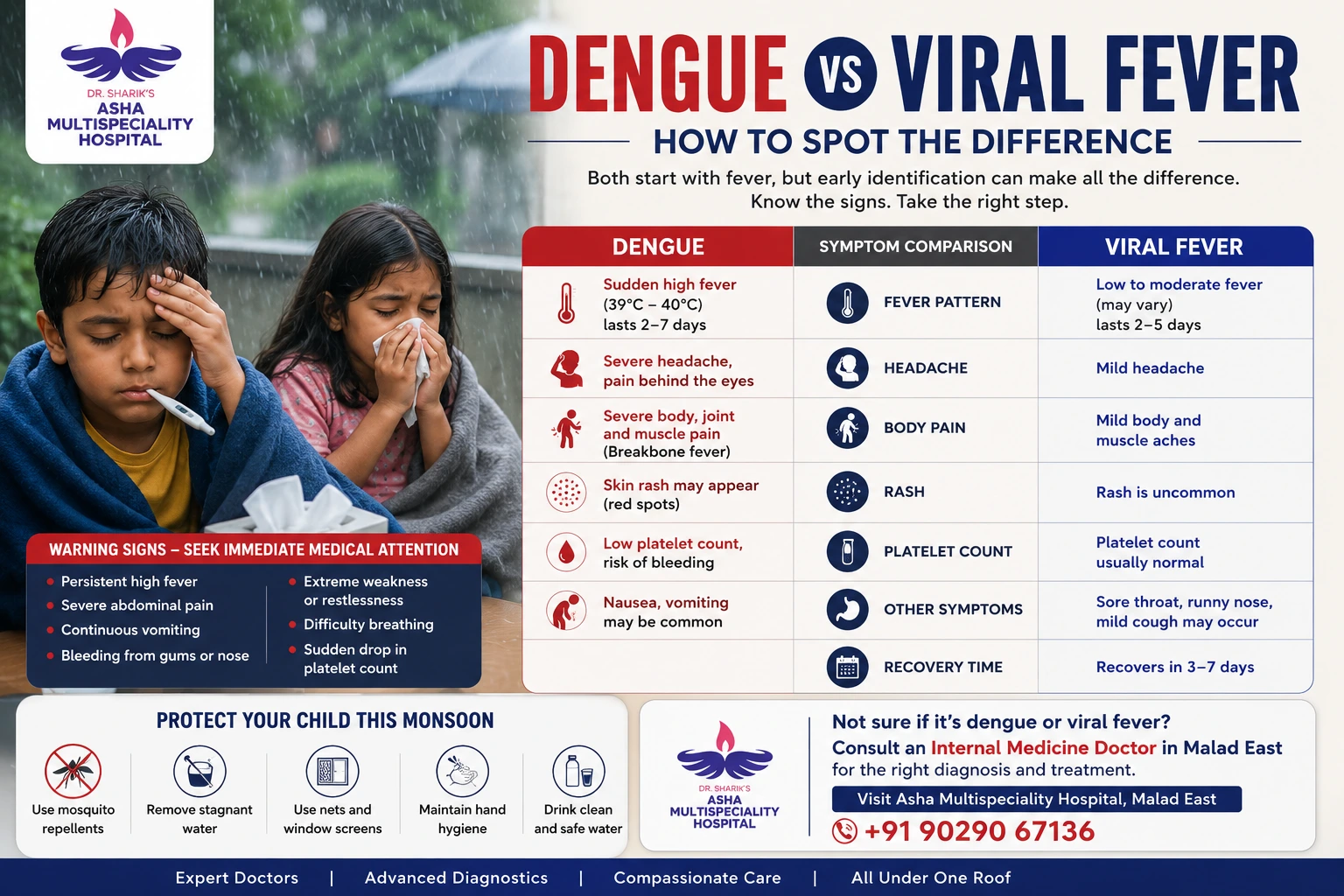
Monsoon season brings relief from the summer heat, but it also increases the risk of seasonal illnesses. Among the most common health concerns during this period are dengue and viral fever. Since both conditions often begin with similar symptoms such as fever, body aches, and fatigue, many people find it difficult to tell them apart.
Understanding the difference between dengue and viral fever is important because early diagnosis and timely treatment can help prevent complications. If symptoms persist or worsen, consulting an experienced internal medicine doctor Malad East can help ensure proper evaluation and treatment.
What Is Viral Fever?
Viral fever refers to a group of infections caused by different viruses. These infections are common during seasonal changes and usually spread through contaminated surfaces, respiratory droplets, or close contact with infected individuals.
Most viral fevers are mild and improve within a few days with adequate rest, hydration, and supportive care. However, some cases may require medical attention, especially in children, elderly individuals, or people with underlying health conditions.

Common Symptoms of Viral Fever
- Fever ranging from mild to high
- Headache
- Body pain and muscle aches
- Sore throat
- Runny or blocked nose
- Fatigue and weakness
- Mild cough
- Loss of appetite
Symptoms usually improve within 3 to 7 days without causing major complications.
What Is Dengue?
Dengue is a mosquito-borne viral infection transmitted primarily by the Aedes mosquito. It is particularly common during the monsoon and post-monsoon seasons due to increased water stagnation, which creates breeding grounds for mosquitoes.
Unlike common viral fever, dengue can become severe if not diagnosed and managed properly. Early medical intervention is important to monitor platelet levels and prevent complications.
Common Symptoms of Dengue
- Sudden high fever
- Severe headache
- Pain behind the eyes
- Intense muscle and joint pain
- Extreme weakness and fatigue
- Nausea and vomiting
- Skin rash
- Mild bleeding from gums or nose in some cases
- Reduced platelet count
If left untreated, severe dengue may lead to serious complications that require hospitalization.
Dengue vs Viral Fever: Key Differences
Although the initial symptoms may appear similar, there are several signs that can help differentiate dengue from viral fever.
1. Fever Pattern
Viral Fever
- Usually ranges from mild to moderate intensity
- Often responds well to medication
- Improves within a few days
Dengue
- Typically presents with sudden high fever
- Fever may persist despite medication
- Often accompanied by severe body pain
2. Body Pain Severity
Viral Fever
- Mild to moderate muscle aches
Dengue
- Intense muscle and joint pain
- Often referred to as “breakbone fever” because of the severity of discomfort
3. Skin Rash
Viral Fever
- Rash may occur occasionally but is not common
Dengue
- Skin rashes frequently develop during the illness
- May appear as red spots or widespread redness
People experiencing persistent skin-related symptoms may also benefit from consulting a skin doctor Malad East for proper evaluation.
4. Platelet Count
Viral Fever
- Platelet levels usually remain normal
Dengue
- Platelet counts may decrease significantly
- Regular monitoring is often required
5. Recovery Time
Viral Fever
- Recovery usually occurs within one week
Dengue
- Recovery can take longer
- Fatigue and weakness may continue even after fever subsides
A Quick Self-Check Before Visiting a Doctor
Ask yourself the following questions:
- Has the fever remained high for more than two days?
- Are body aches becoming increasingly severe?
- Have you noticed skin rashes?
- Are you experiencing unusual weakness or dizziness?
- Has there been any bleeding from gums or nose?
- Have recent blood tests shown a drop in platelet count?
If you answer “yes” to any of these questions, it is advisable to seek medical attention promptly.
Why Early Diagnosis Matters
Many people initially assume dengue is just another seasonal fever and delay medical consultation. This can be risky because dengue symptoms may worsen rapidly in some cases.
Early diagnosis helps:
- Monitor platelet levels
- Prevent dehydration
- Identify warning signs quickly
- Reduce the risk of severe complications
- Ensure timely medical intervention
Visiting an experienced internal medicine doctor Malad East can help determine whether symptoms are caused by dengue, viral fever, or another underlying condition.
While both illnesses can cause fever, body ache, and fatigue, a doctor can look for distinguishing signs such as rash patterns, drop in platelet count, or persistent high-grade fever that go beyond what a typical viral infection would show. Relying on self-diagnosis or home remedies alone can delay the right treatment, especially since dengue requires closer monitoring for warning signs like low platelet counts and dehydration.
At Asha Hospital, patients can access blood tests, platelet monitoring, and expert consultation under one roof, making it easier to get a timely and accurate diagnosis. Early evaluation not only ensures appropriate care but also gives peace of mind during monsoon season, when both dengue and viral fever cases tend to rise together in Mumbai
Digestive Symptoms Can Also Occur
While fever is the primary symptom, some patients may experience digestive issues such as:
- Nausea
- Vomiting
- Abdominal discomfort
- Loss of appetite
- Diarrhoea
When digestive symptoms become significant, consultation with a gastroentrologist doctor in Malad East may be recommended to assess gastrointestinal complications and provide specialized care.
Tips to Prevent Dengue and Viral Fever
Prevention remains the best approach during the monsoon season.
Protect Yourself from Mosquito Bites
- Use mosquito repellents regularly
- Wear full-sleeved clothing
- Install window screens where possible
- Use mosquito nets during sleep
Eliminate Mosquito Breeding Sites
- Remove stagnant water from containers
- Clean water tanks regularly
- Empty flower pots and trays frequently
- Ensure proper drainage around your home
Maintain Good Hygiene
- Wash hands regularly
- Drink clean and safe water
- Avoid consuming contaminated food
- Follow basic sanitation practices
Support Your Immunity
- Eat a balanced diet
- Stay hydrated
- Get adequate sleep
- Exercise regularly
When Should You Visit a Hospital?
You should seek immediate medical attention if you experience:
- Persistent high fever
- Severe weakness
- Breathing difficulties
- Continuous vomiting
- Significant drop in platelet count
- Bleeding symptoms
- Severe abdominal pain
Prompt evaluation can help avoid complications and support faster recovery.
Why Choose Asha Multispeciality Hospital?
When dealing with seasonal illnesses such as dengue and viral fever, access to comprehensive medical care is essential. Asha Multispeciality Hospital brings together multiple specialties under one roof, making it easier for patients to receive coordinated treatment.
As a best multispeciality hospital Malad East, the hospital offers access to experienced physicians, specialists, diagnostic services, and emergency care facilities. Whether you require consultation from an internal medicine doctor Malad East, a gastroentrologist doctor in Malad East, or a skin doctor Malad East, having all services available in one location ensures faster diagnosis and seamless care.
Conclusion
Dengue and viral fever may appear similar at first, but they differ significantly in terms of severity, complications, and treatment requirements. Recognising warning signs early can make a major difference in recovery outcomes.
If you or a family member develops persistent fever, severe body aches, skin rashes, or unusual weakness during the monsoon season, do not delay seeking medical advice. Early consultation with the experts at Asha Multispeciality Hospital, the best multispeciality hospital Malad East, can help ensure timely diagnosis, appropriate treatment, and peace of mind.