Asha Multispeciality Hospital
Medical emergencies can happen at any time, and the last thing anyone wants to worry about during a health crisis is arranging funds for treatment. This is where cashless hospitalization becomes a valuable benefit. With a cashless facility, patients can receive treatment without paying the entire hospital bill upfront, provided their insurance policy or government health scheme covers the expenses.
However, many people are unsure about the difference between a Private Insurance Cashless Hospital and a Government Cashless Hospital. While both aim to reduce the financial burden of medical care, they differ in terms of eligibility, coverage, and the way claims are processed.
In this article, we’ll explain the differences, benefits, and factors to consider when choosing between private and government cashless hospitals.
What Is Cashless Hospitalization?
Cashless hospitalization is a facility where your insurance company or government health scheme directly settles eligible medical expenses with the hospital. Instead of paying the full treatment cost yourself and claiming reimbursement later, you only need to pay for expenses that are not covered under your policy or scheme.
To avail of this benefit, treatment generally needs to be taken at a network hospital recognized by your insurer or government healthcare program.
What Is a Private Insurance Cashless Hospital?
A Private Insurance Cashless Hospital is a hospital that has agreements with one or more private health insurance companies. If you hold an active health insurance policy with a participating insurer, you may be eligible for cashless treatment.
The hospital coordinates with the insurance provider for pre-authorization, documentation, and claim settlement, making the admission process smoother for patients.
Benefits of Private Insurance Cashless Hospitals
- Faster admission process for planned procedures
- Access to a wide network of private hospitals
- Coverage for various surgeries and treatments (as per policy terms)
- Dedicated insurance help desk
- Reduced financial burden during hospitalization
- Cashless treatment for emergencies in many cases
Private insurance is commonly provided by employers or purchased individually to cover hospitalization expenses.
What Is a Government Cashless Hospital?
A Government Cashless Hospital provides treatment under government-sponsored healthcare schemes for eligible beneficiaries. These schemes are designed to improve access to affordable healthcare for different sections of society.
Depending on the scheme, eligible patients may receive cashless treatment for selected medical conditions, surgeries, or hospitalization.
Government cashless facilities are especially beneficial for economically weaker sections, senior citizens, and eligible government employees.
Benefits of Government Cashless Hospitals
Some advantages include:
- Affordable healthcare access
- Cashless treatment for eligible beneficiaries
- Financial protection during hospitalization
- Coverage for various medical procedures under approved schemes
- Access to essential healthcare services
Patients should always verify their eligibility and understand the benefits available under their specific government health scheme.
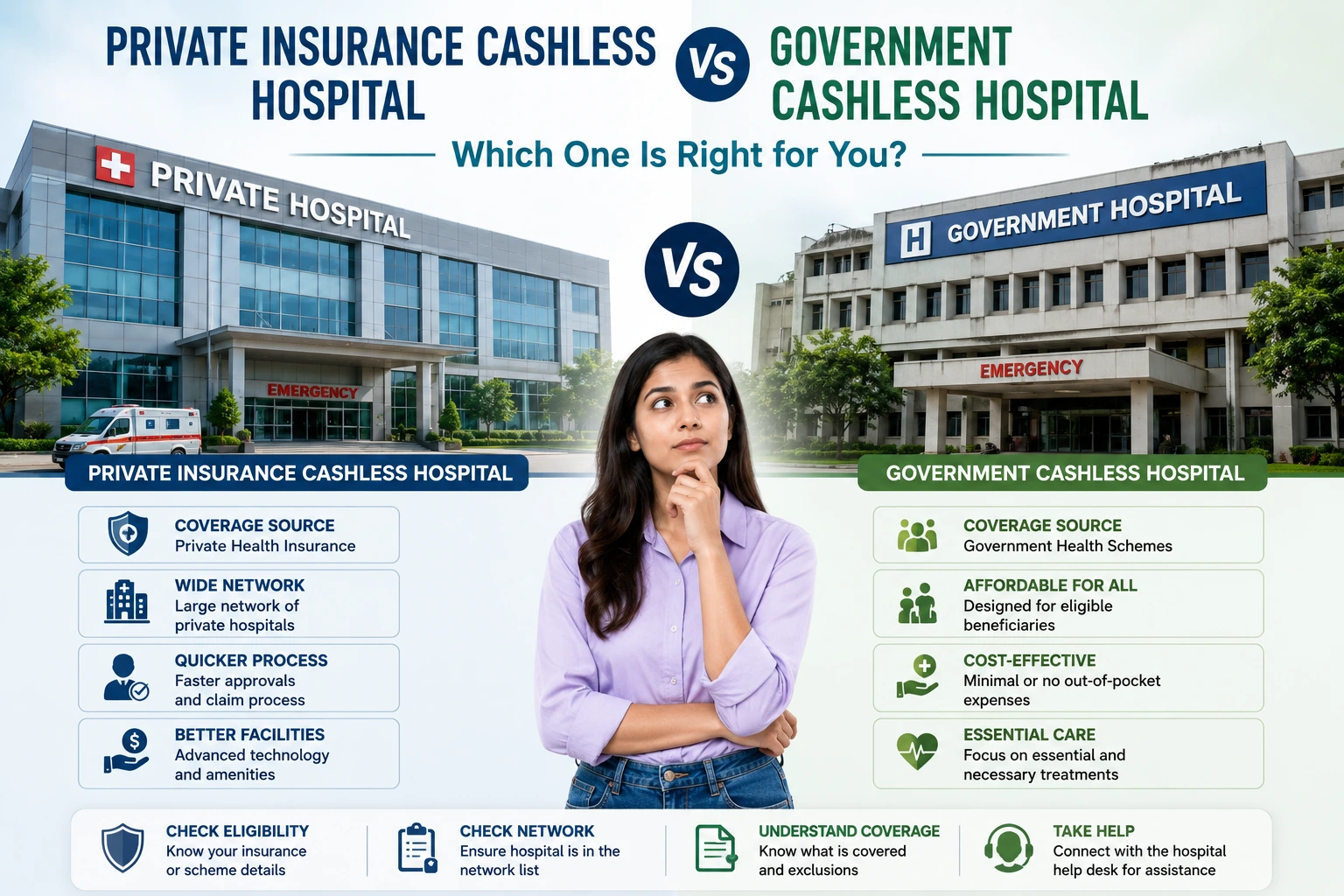
Private Insurance vs Government Cashless Hospital
Understanding the key differences can help you choose the right option.
| Feature | Private Insurance Cashless Hospital | Government Cashless Hospital |
|---|---|---|
| Coverage Source | Private health insurance company | Government healthcare scheme |
| Eligibility | Active insurance policyholder | Eligible beneficiaries under government schemes |
| Premium | Paid by policyholder or employer | Usually government-funded |
| Hospital Network | Network hospitals approved by insurer | Empanelled hospitals under the scheme |
| Coverage | Depends on insurance policy | Depends on scheme guidelines |
| Claim Process | Insurance company approval | Government scheme authorization |
Both options reduce out-of-pocket medical expenses, but eligibility and benefits vary.
Which One Should You Choose?
The right choice depends on your healthcare coverage.
You may prefer a Private Insurance Cashless Hospital if:
- You have employer-provided health insurance.
- You have purchased an individual or family health insurance plan.
- You want access to a larger network of private hospitals.
- Your policy offers higher coverage limits.
A Government Cashless Hospital may be suitable if:
- You are enrolled in a government healthcare scheme.
- You qualify under the scheme’s eligibility criteria.
- Your required treatment is covered by the scheme.
Some patients may even have access to both options, depending on their insurance coverage and government scheme eligibility.
Things to Check Before Admission
Before opting for cashless hospitalization, make sure you:
- Confirm whether the hospital is part of your insurer’s or scheme’s network.
- Carry your health insurance card or government scheme ID.
- Keep a valid photo ID ready.
- Inform the hospital’s insurance desk during admission.
- Understand which expenses are covered and which may require additional payment.
- Check waiting periods and exclusions under your policy.
Proper documentation can help avoid delays in claim approval.
Common Treatments Covered Under Cashless Facilities
Coverage varies depending on the insurer or government scheme, but commonly covered treatments include:
- General surgeries
- Orthopaedic procedures
- Cardiac treatments
- Maternity services (subject to policy terms)
- Emergency hospitalization
- Medical management requiring inpatient care
- Critical illness treatments
- Diagnostic procedures associated with hospitalization
Always review your policy or scheme documents to understand the exact coverage.
Why Choosing the Right Hospital Matters
Regardless of whether you use private insurance or a government health scheme, selecting the right hospital is equally important.
Look for a hospital that offers:
- Experienced doctors
- Modern diagnostic facilities
- Emergency care services
- Dedicated insurance assistance
- High standards of patient safety
- Transparent billing
- Comprehensive medical specialties
Choosing a hospital with an experienced insurance support team can make the cashless claim process much smoother.
Conclusion
Both Private Insurance Cashless Hospitals and Government Cashless Hospitals play an important role in making quality healthcare more accessible and affordable. While private insurance offers flexibility and broader hospital networks for policyholders, government cashless schemes ensure that eligible individuals can receive essential medical treatment without significant financial burden.
Understanding your insurance policy or government health scheme before a medical emergency can save time, reduce stress, and help you make informed decisions when you need healthcare the most.
If you’re looking for a maternity hospital in Malad East that also supports private insurance cashless facilities and eligible government cashless schemes, Asha Multispeciality Hospital is a comprehensive multispeciality option — offering patient-focused healthcare, experienced medical professionals, advanced facilities, and dedicated assistance throughout the admission and claim process.