Asha Multispeciality Hospital
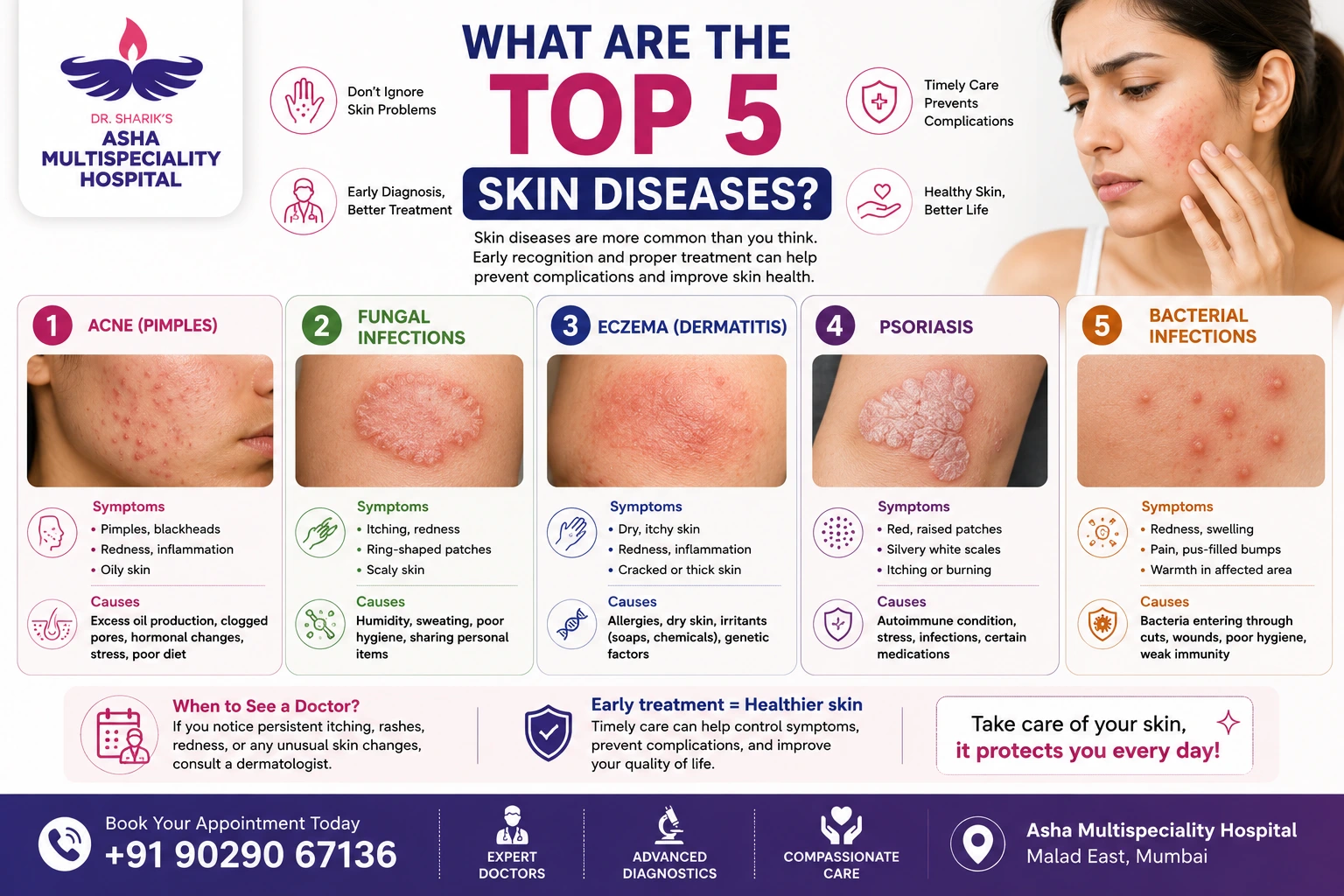
Skin diseases are more common than many people realise, and early signs are often missed or ignored. Understanding the most common skin conditions can help in timely care and better skin health.
The skin is the body’s largest organ and plays an important role in protecting against infections, environmental damage, and harmful substances. Skin conditions can impact more than just appearance, often affecting comfort, self-confidence, and day-to-day well-being.
At Asha Hospital, individuals commonly consult specialists for a wide range of skin concerns, from minor irritations to long-term dermatological conditions. Access to a qualified dermatologist in Malad East Mumbai can help identify skin concerns early and support effective management.
This blog explores the top five common skin diseases, their symptoms, causes, and treatment approaches. Understanding these conditions can help individuals recognise warning signs and know when to consult a skin doctor in Malad for professional care.
Why Understanding Common Skin Diseases Is Important
Many skin conditions begin with mild symptoms that are often ignored or mistaken for temporary irritation. Early recognition can help prevent complications and improve treatment outcomes.
Skin diseases may develop due to infections, immune system responses, allergies, genetics, or environmental factors. Some conditions are temporary, while others require ongoing management under the guidance of a skin specialist in Malad East.
Awareness helps patients seek timely medical attention rather than relying solely on home remedies. Understanding common skin disorders also makes it easier to discuss symptoms with healthcare professionals.
Recognising symptoms early can contribute to better skin health and comfort. The following sections explore five of the most commonly diagnosed skin diseases.
Acne – A Very Common Skin Condition
Acne affects people of all ages, although it is particularly common during adolescence and early adulthood. It develops when hair follicles become blocked with oil, dead skin cells, and bacteria.
What Causes Acne?
Several factors can contribute to acne, including:
- Hormonal changes
- Excess oil production
- Genetics
- Certain medications
- Stress
Common Symptoms of Acne
Symptoms may include:
- Blackheads
- Whiteheads
- Pimples
- Painful cysts
- Skin inflammation
Treatment and Skin Care Approaches
Treatment depends on the severity of the condition and may include topical medications, oral medicines, or lifestyle modifications. A consultation with a skin doctor in Malad can help determine the most suitable treatment plan based on individual needs.
Although acne is common, untreated cases may lead to scarring and emotional distress. Seeking professional evaluation can help manage symptoms effectively and reduce long-term skin damage.
Eczema – A Chronic Condition That Affects Skin Comfort
Eczema is a group of conditions that cause inflammation, itching, and irritation of the skin. It can affect both children and adults and often occurs in cycles of flare-ups and remission.
Signs and Symptoms
Common symptoms include:
- Dry skin
- Severe itching
- Red patches
- Cracked skin
- Thickened skin in chronic cases
Common Triggers
Eczema symptoms may worsen due to:
- Allergens
- Harsh soaps
- Weather changes
- Stress
- Certain fabrics
Managing Eczema Effectively
Management typically focuses on controlling symptoms and avoiding triggers. A dermatologist in Malad East, Mumbai, may recommend moisturisers, medicated creams, and lifestyle adjustments to support skin health.
Although eczema is not contagious, it can significantly affect daily life when symptoms are severe. Understanding triggers can help patients reduce flare-ups and improve comfort.
Psoriasis – More Than Simply Dry Skin
Psoriasis is a long-term autoimmune condition that accelerates the skin cell renewal cycle. This rapid turnover causes thick, scaly patches to form on the skin’s surface.
Understanding Psoriasis
The condition commonly affects:
- Scalp
- Elbows
- Knees
- Lower back
- Nails
Symptoms Patients Should Look For
Symptoms may include:
- Raised red patches
- Silvery scales
- Itching
- Burning sensations
- Joint discomfort in some cases
Available Treatment Options
Treatment plans may involve topical therapies, light therapy, or systemic medications depending on severity. Patients often benefit from consulting a skin specialist in Malad East who can provide a comprehensive assessment and long-term management strategy.
Psoriasis is a lifelong condition, but symptoms can often be managed effectively with appropriate care. Early diagnosis allows patients to better control flare-ups and maintain quality of life.
Fungal Skin Infections – Common in Humid Environments
Fungal infections are among the most frequently reported skin problems, especially in warm and humid climates. These infections occur when fungi grow excessively on the skin.
Types of Fungal Infections
Common fungal infections include:
- Ringworm
- Athlete’s foot
- Jock itch
- Nail fungal infections
Risk Factors and Symptoms
Individuals may be at increased risk if they:
- Sweat excessively
- Have diabetes
- Share personal items
- Have weakened immunity
Symptoms often include itching, redness, scaling, and skin discolouration.
Prevention and Treatment
Good hygiene practices play an important role in prevention. A skin doctor in Malad may suggest antifungal medicines along with suitable skincare measures depending on the type and severity of the infection.
Prompt treatment helps prevent the infection from spreading to other areas of the body. Preventive habits can also reduce the risk of recurrence.
Vitiligo – Understanding Changes in Skin Pigmentation
Vitiligo is a condition that causes loss of skin colour in patches due to the destruction of pigment-producing cells. The condition can affect any part of the body and varies widely between individuals.
What Is Vitiligo?
Vitiligo develops when melanocytes lose function or are destroyed. The exact cause is not fully understood, but autoimmune factors are believed to play a role.
Causes and Risk Factors
Potential contributing factors include:
- Autoimmune disorders
- Family history
- Genetic factors
- Certain environmental triggers
Treatment and Supportive Care
Treatment options may include topical medications, light therapy, and cosmetic camouflage techniques. Consultation with a dermatologist in Malad East, Mumbai, can help patients understand available options and set realistic treatment expectations.
Vitiligo is not contagious and does not directly affect physical health. However, emotional support and medical guidance can be valuable for individuals adjusting to visible skin changes.
When Should You Consult a Skin Specialist?
Not every skin concern requires urgent medical attention, but persistent symptoms should never be ignored. Seeking expert advice can help identify the underlying cause and prevent complications.
Patients should consider seeking medical advice if they experience:
- Persistent rashes
- Severe itching
- Rapidly spreading lesions
- Unexplained skin discolouration
- Recurring infections
- Changes in moles or skin growths
A qualified skin specialist in Malad East can provide an accurate diagnosis and recommend appropriate treatment options. Patients seeking comprehensive healthcare services may also benefit from consulting specialists at the best multispeciality hospital in Malad for coordinated care.
Timely intervention often leads to better management of skin conditions. Professional evaluation ensures that treatment decisions are based on the specific needs of each patient.
Quick Comparison of the Top 5 Skin Diseases
| Skin Disease | Common Symptoms | Possible Causes | Treatment Approach |
| Acne | Pimples, blackheads, whiteheads, cysts | Hormonal changes, excess oil production, bacteria, stress | Topical treatments, oral medications, skincare routine changes |
| Eczema | Dry skin, itching, redness, inflammation, cracked skin | Allergies, irritants, weather changes, genetic factors | Moisturisers, medicated creams, trigger avoidance |
| Psoriasis | Red patches, silvery scales, itching, thickened skin | Autoimmune response, genetic factors, immune system imbalance | Topical therapy, phototherapy, systemic medications |
| Fungal Infections | Itching, redness, scaling, rashes, nail changes | Fungal overgrowth, humidity, poor hygiene, weak immunity | Antifungal creams, oral antifungal medicines, hygiene care |
| Vitiligo | White patches on skin, loss of pigmentation | Autoimmune condition, genetic factors, oxidative stress | Light therapy, topical treatments, supportive care |
Understanding the differences between these conditions can help patients recognise symptoms earlier. Proper diagnosis remains essential because many skin disorders can appear similar during their initial stages.
Taking the Right Steps Towards Healthier Skin
Skin diseases are common and can affect people of all ages, but early recognition and appropriate treatment can make a significant difference. Conditions such as acne, eczema, psoriasis, fungal infections, and vitiligo each require a tailored approach based on their underlying causes and severity.
Early consultation with a dermatologist in Malad East, Mumbai, can help identify the cause of symptoms and guide appropriate treatment decisions. A multidisciplinary healthcare approach may be particularly beneficial when skin conditions are linked to other medical concerns.
If you are experiencing persistent skin symptoms or have concerns about your skin health, schedule a consultation with a qualified specialist today. Early evaluation can support timely diagnosis, personalised treatment planning, and better long-term skin care.