Asha Multispeciality Hospital
Breast cancer is one of the most common cancers affecting women worldwide and is increasingly being diagnosed in India. While hearing the words “breast cancer” can be frightening, advancements in medical science have significantly improved treatment outcomes. In many cases, when breast cancer is detected early, treatment can be highly effective, leading to better recovery rates and improved quality of life.
Despite growing awareness, many women still overlook early symptoms or delay screenings due to fear, misconceptions, or lack of information. Understanding the warning signs, risk factors, and importance of early diagnosis can help save lives.
What Is Breast Cancer?
Breast cancer occurs when abnormal cells in the breast begin to grow uncontrollably. These cells can form a tumour and, if left untreated, may spread to nearby tissues or other parts of the body.
Although breast cancer primarily affects women, men can also develop the disease, though it is much less common.
Breast cancer can develop in different parts of the breast, including:
- Milk ducts
- Lobules (milk-producing glands)
- Connective tissues
The type and stage of cancer influence treatment options and outcomes.
How Common Is Breast Cancer in India?
Breast cancer has become one of the leading cancers among Indian women, particularly in urban areas. Factors such as changing lifestyles, delayed pregnancies, increasing obesity rates, and longer life expectancy have contributed to the rise in cases.
The encouraging news is that early detection significantly improves treatment success rates. Regular screenings and awareness of symptoms can help identify the disease before it progresses.
Early Signs of Breast Cancer
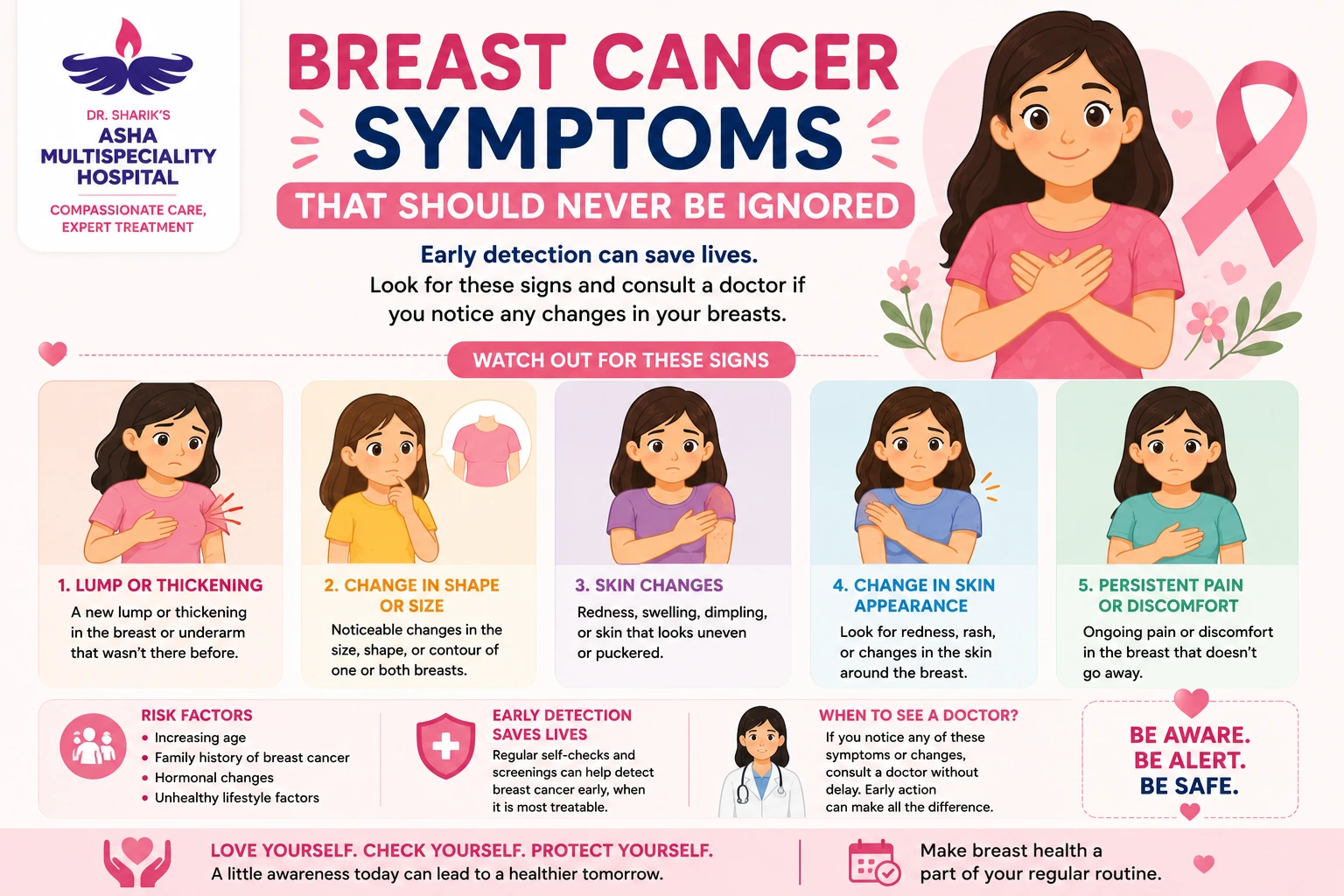
Breast cancer may not always cause pain during its early stages. This is why women should be familiar with changes in their breasts and seek medical advice if they notice anything unusual.
1. A Lump in the Breast or Underarm
A new lump or thickened area in the breast is one of the most common warning signs.
The lump may:
- Feel hard or firm
- Have irregular edges
- Be painless initially
Not all breast lumps are cancerous, but any new lump should be evaluated by a doctor.
2. Changes in Breast Size or Shape
Unexplained changes in the appearance of one breast compared to the other may require medical attention.
3. Skin Changes
Watch for:
- Redness
- Swelling
- Dimpling of the skin
- Thickened skin resembling an orange peel
These changes may indicate underlying breast abnormalities.
4. Nipple Changes
Potential warning signs include:
- Inverted nipple
- Changes in nipple appearance
- Persistent irritation
- Scaling around the nipple
5. Unusual Nipple Discharge
Any discharge from the nipple, particularly if it is bloody or occurs without squeezing, should be investigated.
6. Persistent Breast Pain
Although breast pain is often caused by non-cancerous conditions, persistent or unexplained pain should not be ignored.
Risk Factors for Breast Cancer
While breast cancer can affect anyone, certain factors may increase the risk.
Age
The risk of breast cancer generally increases with age, especially after 40 years.
Family History
Women with close relatives who have had breast cancer may face a higher risk.
Genetic Mutations
Inherited gene mutations such as BRCA1 and BRCA2 can significantly increase the likelihood of developing breast cancer.
Hormonal Factors
Factors that increase lifetime exposure to estrogen may contribute to risk, including:
- Early menstruation
- Late menopause
- Delayed pregnancy
- Not having children
Lifestyle Factors
Certain lifestyle habits may increase risk:
- Obesity
- Lack of physical activity
- Excessive alcohol consumption
- Smoking
- Poor dietary habits
Can Breast Cancer Be Prevented?
There is no guaranteed way to prevent breast cancer, but certain healthy habits may help lower risk. Regular screenings, awareness of breast changes, and consultations with a qualified breast cancer doctor in Malad can also play an important role in early detection and timely treatment
Maintain a Healthy Weight
Excess body weight is associated with an increased risk of several cancers, including breast cancer.
Exercise Regularly
Regular physical activity helps maintain hormonal balance and overall health.
Eat a Balanced Diet
Focus on:
- Fresh fruits
- Vegetables
- Whole grains
- Lean proteins
Reducing processed foods may contribute to better long-term health.
Avoid Smoking and Limit Alcohol
Tobacco and excessive alcohol consumption are linked to several types of cancer.
Why Early Detection Is So Important
One of the most important facts about breast cancer is that early diagnosis can dramatically improve treatment outcomes.
Benefits of early detection include:
- More treatment options
- Less aggressive treatment
- Better survival rates
- Improved quality of life
- Reduced risk of cancer spreading
When identified in its early stages, breast cancer is often highly treatable.
Breast Self-Examination: A Simple Habit That Matters
Women should become familiar with how their breasts normally look and feel.
A monthly breast self-examination can help identify changes early.
Look for:
- New lumps
- Changes in shape
- Skin abnormalities
- Nipple discharge
- Persistent discomfort
Any unusual findings should be discussed with a healthcare professional.
Screening Tests for Breast Cancer
Regular screening plays a vital role in early diagnosis.
Mammography
A mammogram is a specialised X-ray used to detect breast abnormalities before symptoms appear.
Clinical Breast Examination
A healthcare provider performs a physical examination to check for abnormalities.
Ultrasound and Additional Imaging
Depending on individual circumstances, doctors may recommend further imaging tests for detailed evaluation.
When Should You See a Doctor?
Seek medical attention if you notice:
- A new breast lump
- Changes in breast appearance
- Persistent breast pain
- Nipple discharge
- Skin changes on the breast
- Swelling in the underarm area
Prompt evaluation helps ensure early diagnosis and appropriate treatment.
Supporting Women Through Awareness and Action
Breast cancer awareness is not only about recognising symptoms; it is about encouraging proactive healthcare. Open conversations, regular screenings, and timely medical consultations can help reduce delays in diagnosis.
Families, friends, and healthcare providers all play a role in supporting women to prioritise their health and seek medical advice when concerns arise.
Conclusion
Breast cancer remains a significant health concern, but early detection continues to be one of the most powerful tools in improving outcomes. Understanding the warning signs, knowing your risk factors, and participating in regular screenings can make a life-changing difference.
If you notice any unusual breast changes, do not ignore them. Seeking timely medical advice can lead to earlier diagnosis, more effective treatment, and greater peace of mind. Consulting experienced specialists at the best hospital in Malad East can ensure access to comprehensive screening, accurate diagnosis, and personalized care.
Remember, when it comes to breast cancer, awareness and early action can save lives. Prioritizing regular check-ups and timely medical attention can make all the difference in achieving better health outcomes